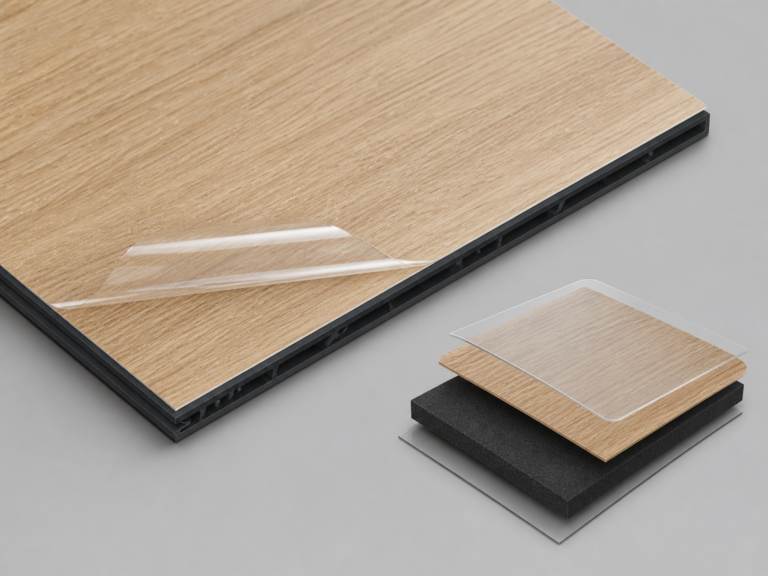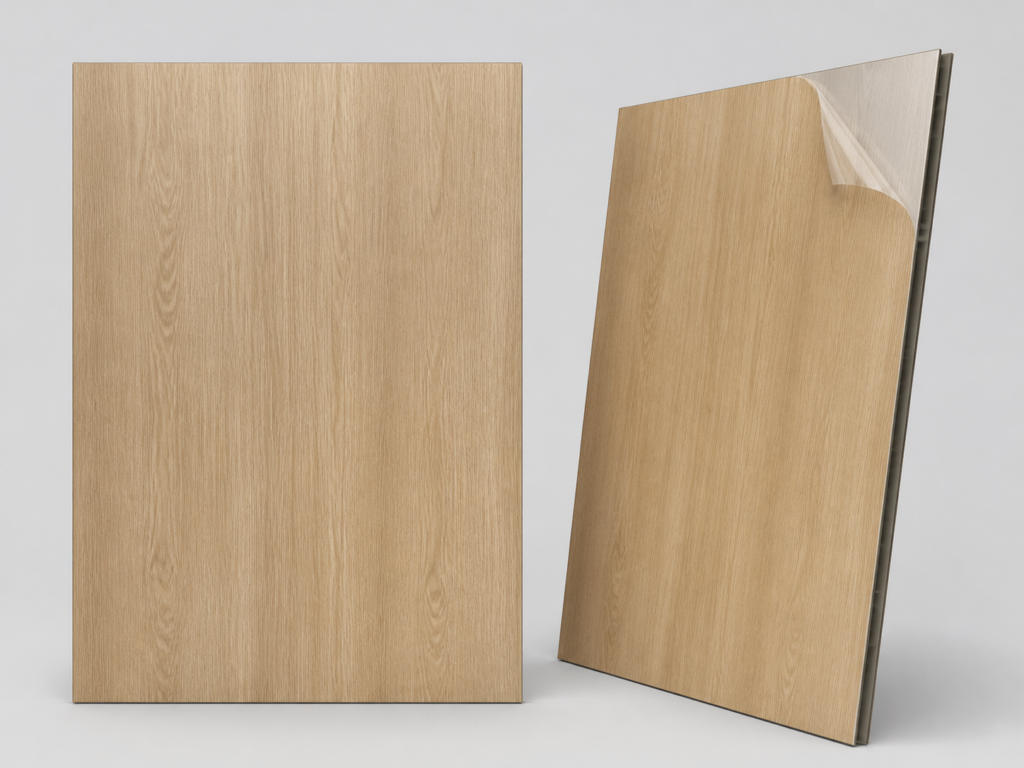
OEM is not a single yes-or-no option. Changing length, finish, profile, carton artwork, label, barcode or documentation can affect MOQ, samples, tooling, production time and quality control in different ways.
Use a confirmed baseline product
Start from one exact panel configuration. Record overall dimensions, effective coverage, material system, surface, joint, standard length, package basis and intended market. Then list each requested change separately.
OEM option matrix
| Option | What to specify | What may change |
|---|---|---|
| Custom length | Required length, tolerance, quantity and packing limit | MOQ, line feasibility, loading and breakage risk |
| Finish / color | Physical sample, code, grain direction and gloss | Film MOQ, color approval and batch control |
| Profile / mold | Dimensioned drawing and target use | Tooling, trial run, ownership and lead time |
| Private label | Brand file, legal text, country and language | Artwork approval and packaging schedule |
| Barcode / label | Data owner, format, placement and unit level | Verification, rework risk and pack workflow |
| Documents | Languages, markets and exact deliverables | Technical review and translation approval |
Approval sequence
- Confirm baseline model and scope.
- Receive preliminary quotation and OEM feasibility.
- Approve dimensions, sample and artwork.
- Confirm production specification, packaging and inspection points.
- Approve pre-production or production sample when required.
- Release production and retain signed records.
Avoid these common failures
- Using only a screen image as color approval.
- Changing artwork after packaging production begins.
- Assuming standard MOQ applies to every custom finish.
- Mixing several profiles or colors without confirming per-SKU MOQ.
- Publishing certification claims before verifying exact product scope.
Review JH WPC’s OEM & Private Label process and prepare the quotation and approval checklist.