A wall panel should not be selected from appearance alone. The right system must fit the wall dimensions, substrate, joint strategy, finish expectations, installation resources, transport limits and commercial program.
1. Define the visual result
Linear feature surface
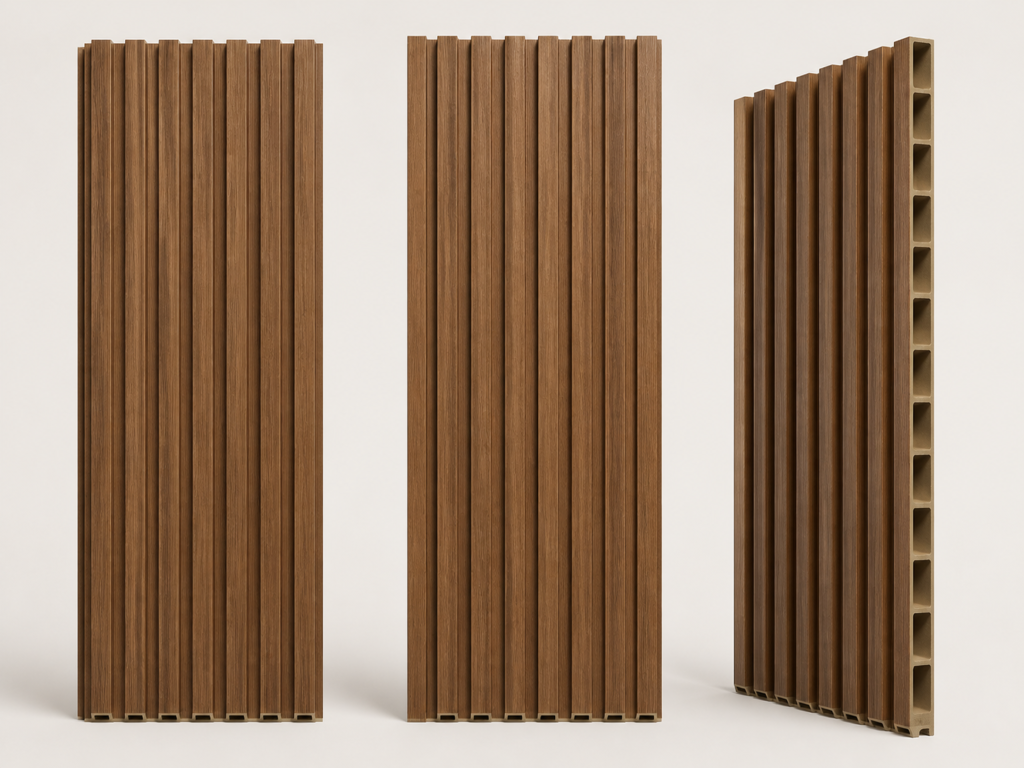
Use a fluted profile when the design calls for repeated ribs, grooves or vertical rhythm. Confirm profile depth, repeat, joint and effective coverage.
Continuous decorative surface
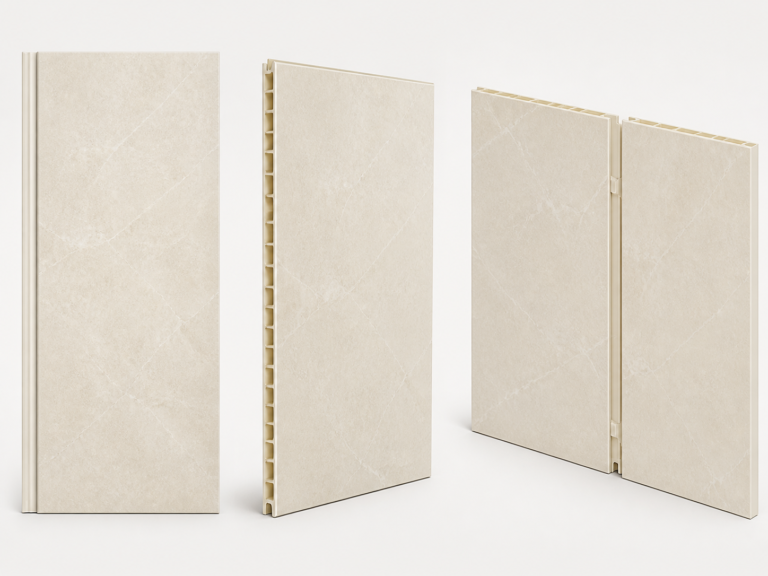
Use an integrated panel or large decorative sheet when the design needs broader wood-look, stone-look or solid-color areas with fewer visual grooves.
2. Compare the format
| Decision | Fluted profile | Integrated panel | Decorative sheet |
|---|---|---|---|
| Visual character | Strong linear relief | Modular continuous panel | Large flat surface |
| Planning data | Overall width, depth, profile repeat, coverage | Width, thickness, length, joint, coverage | Sheet width, length, thickness, edge treatment |
| Typical detail focus | Starting edge, profile alignment, trims | Joint engagement and long-panel handling | Flatness, adhesive and sheet joints |
3. Confirm the substrate and fixing route
Identify whether the wall is drywall, masonry, plywood, existing tile or a framed/batten system. A flat decorative sheet may depend heavily on substrate flatness and compatible adhesive. A profile panel may allow adhesive, concealed mechanical fixing or a subframe, but only the order-approved method should be used.
4. Check logistics before fixing the length
- Can the selected length enter the container, building, lift and installation area?
- Does the package protect long edges and decorative surfaces?
- Is custom length worth the MOQ, production and transport trade-off?
- Have installation waste, cuts, openings and spare material been included?
5. Ask for the right evidence
Before order, request the current specification, dimensioned drawing, approved finish sample, packaging basis, installation guidance and any test report required by the project. A marketing statement is not a substitute for model-specific evidence.